


Resumen
Si bien las subvenciones son un instrumento de política económica útil, cuando son mal utilizados pueden generar una serie de efectos negativos. Hasta la fecha, la Organización Mundial de Comercio (OMC), es la única organización a nivel global que se ocupa de regular el comercio; tratando así el tema de subvenciones en el marco de sus acuerdos. En concordancia, el principal objetivo de esta investigación es examinar el marco de las subvenciones a nivel global bajo las normas de la OMC, y discutir la cuestión de la transparencia internacional. Para ello, se ha realizado una revisión sistemática de literatura por método PRISMA. Los principales hallazgos fueron que las disciplinas actuales de la OMC se han quedado cortas para hacer frente a las subvenciones y la transparencia, especialmente en un contexto global cambiante, donde la normativa debe ir a la vanguardia para hacer frente a economías como China.
Abstract
While subsidies are a useful economic policy tool, their misuse can lead to significant negative effects. To date, the World Trade Organization (WTO) is the only global body regulating trade, addressing subsidies within its agreements. This study aims to examine the global framework of subsidies under WTO rules and discuss the issue of international transparency. A systematic literature review was conducted using the PRISMA method (2020). The main findings indicate that current WTO disciplines are insufficient to effectively address subsidies, especially in a rapidly changing global context. The study underscores the necessity for updated regulations to stay ahead in managing challenges posed by economies like China. To enhance global economic welfare, it is crucial for the WTO to adopt more robust and adaptive subsidy regulations that can respond to the evolving economic landscape.
Palabras clave
Subvención, Efectos, Transparencia, Acuerdo, China
Keywords
Subsidies, Effects, Transparency, Agreement, China
How to cite: Cordero, S., & Pinos, L. (2024). Subsidies in the WTO Framework: Types, Effects and Discussion of International Multilateral Transparency. DICERE Revista De Derecho Y Estudios Internacionales, 1(2), 172–213. https://doi.org/10.33324/dicere.v1i2.839
1 Introduction
In an increasingly interconnected global economic context, subsidies have emerged as a key instrument used in economic policy. In fact, these aids were the most frequent form of government intervention after the 2008 financial crisis, surpassing tariffs and other non-tariff-measures. On the other hand, to date the World Trade Organization (WTO) is the only organization that governs trade rules between countries, so it is responsible for regulating subsidies under its multilateral agreements. The main agreement in charge of regulating subsidies is the Agreement on subsidies and Countervailing Measures (ASCM), which seeks to reduce the impact of subsidies on trade in goods. It is important to add that when carefully analyzing the subsidies of certain governments to specific industries, they are concentrated in two sectors according to the international Standard industrial Classification: Sector A (agriculture, livestock, hunting and fishing), and sector C (manufacturing); with China being the country that most frequently uses this economic policy tool.
On the other hand, according to the WTO (2022) it is possible to define that “transparency is a first step to understanding the impact of subsidies on international trade and how to minimize their negative effects”. Nevertheless, this issue has been limited since the norms and commitments of the organization are complex, limited and hard to understand. Accordingly, the 28th Global Trade Report that covers the period between 2009-2021, expressed that the majority of subsidies are provided by the largest trading economies so that they can distort global markets (Evennet & Fritz, 2021). In this way, it stablishes that the main countries (United States, China and the European Union) represent more than a half of the number of the global subsidy measures, in a context where China has been the main object of investigations.
Therefore, the motivation of this research is to understand how subsidies work in our current context and their possible effects and/or contributions. In adittion, part of this motivation is to define how the largest economies manage this instrument, keeping China under the big lights. Thus, the objective of this research is to examine the framework of the WTO and discuss international multilateral transparency. For this purpose, a systematic review of the literature was carried out using the PRISMA method (Preferred Reporting Items of Systematic reviews and Meta-Analyses) corresponding to the year 2020 (Page et al., 2020). Thus, the article has been divided as follows: theoretical framework, state of the art, methodology, results, discussion and conclusions.
2 Theorical Framework
According to Singh (2017), the World Trade Organization (WTO) is a trade regulatory organization that encompasses both legal and economic issues of the international trade. The pillars of the WTO are its agreements, which are stablished to guarantee its members some rights in relation to trade. These agreements also seek to stablish a stable and transparent framework to help exporters, importers and producers to carry out their activities (WTO, n. d). In addition, they limit the use of distortionary measures, while non-distortionary measures are not regulated (Josling & Tangermann, 1999).
Since the main function of the WTO as a multilateral organization is to regulate trade among its members, it works as a forum to debate crucial issues, for example, subsidies (Singh, 2017). In fact, it is worth defining what a subsidy refers to. According to the WTO (2006) the word subsidy is commonly used in economics as an antonym for tax; in other words, it is a transfer of public money to a private sector entity.
Similarly, Van Heuvelen (2023) states that subsidies are the transfer of resources by a government to a national entity without an equivalent contribution in return. In addition, it is necessary to mention that subsidies can take different forms, for example: direct subsidies to national companies, tax incentives or favorable financing conditions. On the other hand, according to the oxford dictionary (n. d) a subsidy is the “Money paid by a government or an organization to reduce the costs of the services or of producing goods; so that their prices can be kept low”.
Indeed, the main instrument of the WTO for the regulation of subsidies is the Agreement on Subsidies and Countervailing Measures (ASCM); therefore, it provides several concepts that are necessary for its legal understanding (Collins and Park, 2019). According to article 1 of the ASCM, the definition of subsidy requires two elements to exist: 1) A financial contribution by a government or public body in the territory of a member; 2) To confer a benefit. According to Steger (2010) a financial contribution does not constitute a subsidy if there is not a specific benefit conferred. Moreover, the ASCM does not provide a detailed explanation of this term.
In addition, Barbosa and Bernal (2007) define within the framework of the ASCM that a subsidy is “a financial contribution from a government or any public body in the territory of a member”, in either of the following situations:
- When the practice of a government involves a direct transfer of funds (as grands or loans).
- When public resources are condoned or not collected (for example tax rebates).
- When a government provides goods or services, not general infrastructure, or purchases goods.
- When a government makes payments to a financing mechanism or commend a private entity to realize the functions that were mentioned in the items one and three, which are responsibility of the government.
Within this context, the WTO specifies that the ASCM applies not only to national government measures, but also to those of subnational governments and state-owned enterprises (WTO, n.d.). Moreover, the ASCM establishes three basic categories of subsidies: prohibited, actionable and non-actionable. Prohibited subsidies are those that are imposed to influence trade and therefore may generate negative effects for other countries (WTO, n.d.). In this way, export subsidies and domestic content subsidies are part of this category (Steger, 2010). On the other hand, actionable subsidies are those that may generate “adverse effects” to the interests of other members. For example: damage to domestic production, impairment of benefits resulting from the GATT and other adverse trade effects (Steger, 2010). Also, it is worth mentioning that most subsidies fall into this category, as it includes categories such as subsidies to production. The remaining subsidies are considered non-actionable; however, they expired in 2000 because WTO members could not agree to extend them. In this way, to date, no subsidy program is protected as non-actionable (Borlini, 2023).
Subsequently, the existence of a multilateral solutions system is supposed to allow the regulation of subsidies. However, the real difficulty relies on the need of the complaining member to demonstrate the adverse effects that such subsidies have generated (Michalek, 2004). Therefore, Hoekman and Nelson (2020) state transparency as a fundamental factor for the operation of subsidies in the WTO framework. In compliance, there is also a need to have more information about subsidies as a fundamental factor in determining its incidence throughout the world. Consequently, it is necessary to define transparency.
Generally speaking, transparency can be defined as “The degree to which information is available to outsiders, allowing them to have word in decisions and/or evaluate the decisions taken” (Florinni, 2007, 5). In addition, the WTO glossary (n. d) defines transparency in the trading system as “The degree to which trade policies, practices, and the process by which those are applied; are opened and predictable. Also, it is necessary to establish that without transparency, trade agreements become only words on paper, since transparency is what guarantees fairness. As specified by Wolfe (2013), “for such transparency to be guaranteed, information must be available for the members and they must use it.” (p.1).
Finally, transparency about subsidies refers to the correct provision of information about the total spending on Government programs and market transfers, which alludes to how a policy is developed, implemented and enforced. Nevertheless, it is worth to define the objective of transparency, which relies reduce the asymmetry between the state, the economic actors and citizens (Karim, 2023). Similarly, information asymmetry exacerbates power imbalances, so the WTO strives to reduce information gaps (Wolfe, 2013, 4).
3 State of the Art
To date, the World Trade Organization (WTO) is the only worldwide organization that deals with global rules in favor of regulating trade. As previously mentioned, the main pillar of the WTO are its agreements, which establish legal foundations for international trade and aim to create better trade conditions for the countries (WTO, n. d). In general terms, examples of this agreements include: the agreement of rules of origin, the general agreement on trade in services, the safeguards agreement (WTO, n.d).
As it follows, in concordance to Lino (2023), the current multilateral disciplines on subsidies in the WTO are the ASCM for non-agricultural products; the Agreement on Agriculture for agricultural products and the General Agreement on Trade and Services (GATS). Nevertheless, the latter´s negotiations have not concluded yet (Lino, 2023). In addition, according to Lennan and Switzer (2023), the ASCM is focused only on commercial effects generated by subsidies but it is not able to address environmental or overcapacity issues. In this way, the ASCM does not address all the problems generated by certain forms of subsidies, such as fisheries subsidies.
However, subsidy issues had already been under discussion since the General Agreement on Tariffs and Trade (GATT). For example, Article XVI required all GATT members to notify any subsidy that has the effect of increasing exports or reducing imports (Michaelek, 2004). Then, the rules of action embodied in the GATT were redrafted in the “rule-making agreements” of the Uruguay Round. As a result, the new Agreement on Subsidies and Countervailing Measures (ASCM) emerged (Michaelek, 2004).
It is important to note that the Agreement on Subsidies and Countervailing Measures of 1995 established for the first time a definition of what a subsidy is; as well as expanded the obligation for members to notify their subsidies. In this regard, Article 25 of the ASCM establishes detailed conditions and parameters for the annual notification of any subsidy. At the same time, Article 26 of this agreement entrusts the WTO Subsidies Committee with the periodic review of these subsidy notifications (Corry-Williams & Wolfe, 2010).
In spite of that, according to the International Monetary Fund (2022), there is still an incomplete understanding of the advantages and disadvantages of subsidies in comparison to other policy tools, since the verifiability of national subsidy programs is weak and scarce. Consequently, by the end of March 2008, only 11 members had fully complied with their notification obligations for the period 1995-2006 (WTO, 2008). Similarly, by 2019, 80 members did not make any subsidy notifications to the WTO panel, while another 11 provided a "nil notification" for the same period (WTO, 2021). Consequently, the subsidy balance within the GATT/WTO framework has long been a subject of criticism, especially due its proven inefficiency (Gulotty, 2022).
Thus, the 28th report of the Global Trade Alert determined that subsidies are found in a quarter of trade routes worldwide, with China, the European Union and the United States being the economies that use this instrument the most. Currently, goods exposed to subsidies from the United States and the EU alone account for 28% of global goods, while more than 84% of imported goods in China come from subsidized suppliers (Evenett & Fritz, 2021). Similarly, Hoekman and Nelson (2020) expressed that subsidies represented more than the 52% of all trade-related measures applied between 2009 and the end of 2019. As a result, it is necessary to understand the current effects and possible consequences that those subsidies generate.
According to the Organization for Economic Cooperation and Development (OECD) subsidies can affect the cost and revenue structure of companies and their strategic decisions, as well as those of their consumers. Moreover, they can affect the structure of markets, since non-subsidized competitors can lose market share and even decide not be part of it. As a consequence, some countries try to control subsidy-driven competition that affects trade within their borders (Robinnaru & Pop, 2014).
Thus, it is worth mentioning a study by Kalouptisidi (2018) that aimed to measure subsidies to the Chinese shipbuilding industry and quantify its impact on the global shipbuilding industry. The study expressed that the subsidies granted in China led to substantial reallocation of naval production globally. In consequence, the market shares of China and Japan decreased, which resulted in a reduction of approximately 10% of Japan´s profits. The author also mentioned that if Chinese subsidy schemes were eliminated, its market share would decrease from 49% to only 15%, while Japan would increase by approximately 32% points. Finally, the study compared shipping prices worldwide and found that in the absence of China´s subsidy schemes, prices would be about 7% higher for all other countries (Kalouptsidi, 2018).
On the other hand, according to Shaffer et al. (2015) subsidies tend to artificially strengthen the competitiveness of the industry in which they are used, distorting trade terms. For example, between 2002 to 2010 China provided a subsidy of $4.5 billion to its naval industry, which transmitted a cost advantage to companies in the country. In this way, the production of this industry was encouraged at a level that exceeded domestic demand, so the supply was displaced to foreign markets (Treffler, 2019). Consequently, Chinese naval market share increased from 20% to 60% during this time span. Thus, subsidies to China generated an asymmetry in the terms of trade, since the cost advantage given to China was not available to any other OECD country (Treffler, 2019).
Similarly, Van Heuvelen (2023) states that the effects of subsidies on trade relations have a great impact because they can distort decisions on trade and investment. Furthermore, they can contribute to the idea that trade is unfair, especially when the benefits provided by negotiations within the framework of regional and multilateral agreements are undermined. Finally, subsidies can lead to the idea that governments want to act unfairly, generating a similar reaction in consequence.
Nevertheless, Collins & Park (2019) define that certain types of subsidies are not necessarily harmful from an economic point of view and in fact can serve social purposes, such as stimulating underdeveloped regions. For example, in 2016 a study was carried out on the effects and dependence generated on subsidies in Slovakia. This analysis applied NUTS III classification to determine the dependency of the whole Slovak Republic as well as its specific regions by using data published by the Statistical Office of the Slovak Republic for the years 2009-2013. Accordingly, agriculture in Slovakia has undergone major chances in recent years in terms of its importance at regional level as well as its position in the national economy. Thus, the study found a strong correlation between the level of the production and the volume of Slovakian subsidies. However, there is also a significant dependence of the amount of agricultural production and the volume of subsidies granted in the country (KravcakovaVozarova & Kotulic, 2016).
4 Methods
The selected method for the following article is a systematic literature review (SLR), following the PRISMA (Preferred Reporting Items for Systematic Reviews and Meta-Analyses) declaration of 2020. This declaration arose to evaluate effects health interventions, but nowadays it is also used to evaluate social or educational interventions. Furthermore, this method is usually carried out in reports that include syntheses, such as pairwise comparison meta-analysis; as well as those that only one eligible study is identified (Page et. Al, 2021). In this way, it is worth mentioning the 7 stages on which this research was based:
- Planning: Formulation of the research question.
- Search: Detailed search of the literature in correlation to the research question, either in academic bases or reports from organizations.
- Selection: At this stage all documents have been reviewed to determine those that fulfill the needed criteria.
- Data extraction: At this stage the fundamental data that answers the research question is extracted.
- Evaluation of bias: Once that data has been extracted, it is essential to evaluate the possible bias of the selected information.
- Data analysis: After evaluating the bias, an analysis of the data collected throughout the research is carried out.
- Interpretation of results: Finally, the obtained results are interpreted. For doing so, it is necessary to understand, analyze and synthesize the main results obtained.
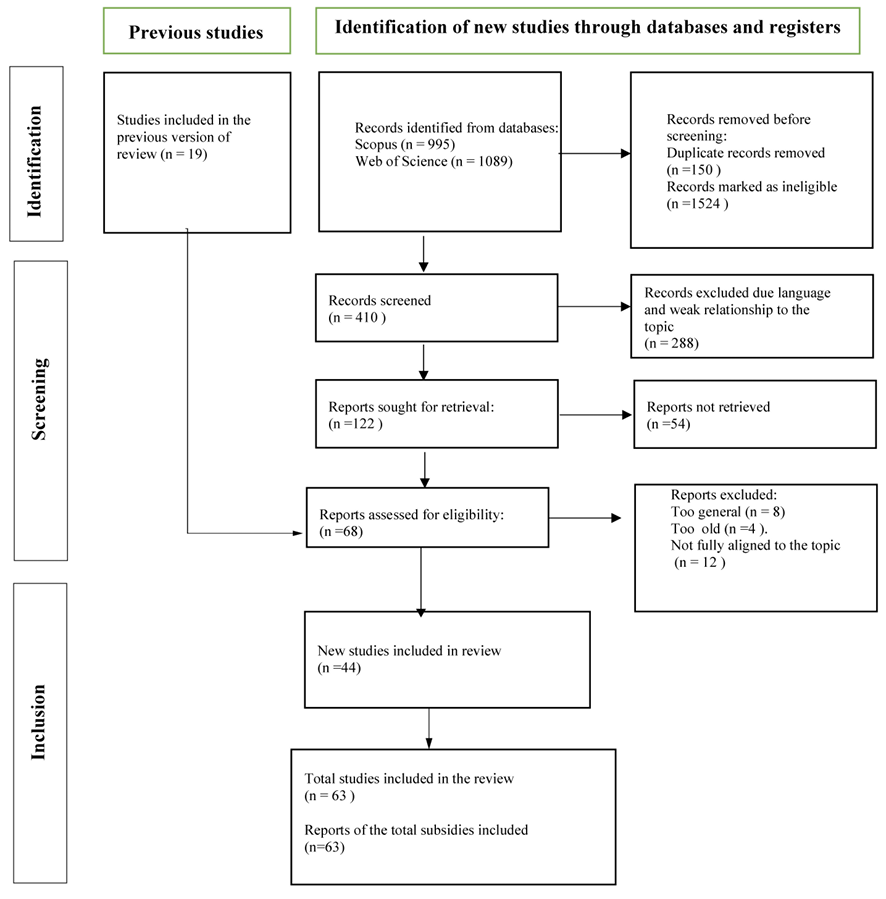
Thus, an exhaustive literature review was conducted using the Scopus and Web of Science databases with the search string “Subsidies” and “WTO”. This search yielded a total of 1089 and 995 articles respectively. Articles that met the following eligibility criteria were selected then. First of all, the selected articles had to allude to state subsidies that referred specifically to the business sector. Second, the selected document had to cover the issue of effects or discrepancies that subsidies generate in the international framework, either social, economic, environmental or competition effects.
At the same time, the eligible articles had to address the issue of multilateral transparency in terms of the WTO, either within a general or specific framework; consequently, the word “transparency” was added to the research string. The research parameter was stablished only in Spanish and English, while only articles from the period between 2017 and 2023 were taken into account for the final selection.
Additionally, some publications and official documents from international organizations were included, such as: Organization for Economic Cooperation and Development, International Monetary Fund, World Bank, etc. Thus, 63 sources were ultimately selected, which are divided as follows: 36 articles, three books, 15 official reports and five web sources from the previously mentioned organizations. Figure 1 shows the study selection process:
Figure 1
PRISMA flowchart
Source: Adapted from Page et. Al (2022)
It is necessary to mention that a large part of the subsidies that the countries have granted to their industries are focused on agriculture, livestock, hunting and fishing (sector A), manufacturing (sector C), and a few studies in the public administration and defense (sector O). The coding of industries is indeed based on the International Standard Industrial Classification (ISIC).
Finally, the annexes are shown in the following URL: https://drive.google.com/drive/u/0/folders/1HAuzj-Z08pRDllsGwNoDZ7TkBJEyY7Hp
5 Results
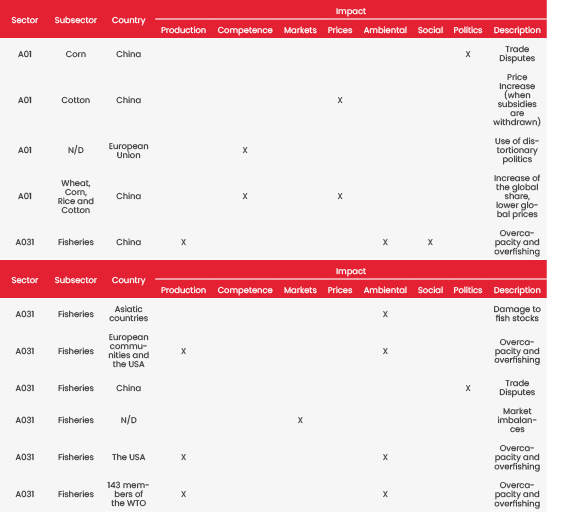
Within the first part of the results, national and foreign effects of subsidies through different economic sectors are shown, according to the sector that they belong to. For this purpose, the classification was based on the International Standards Industrial Classification (ISIC). Table 1 shows the effects corresponding to sector A, which refers to Agriculture, Livestock, Forestry and Fisheries. It should be noted the effects are focused only on the agriculture and fisheries subsectors.
Table 1
Effects of subsidies in sector A: Agriculture, Livestock, Forestry and Fisheries
Source: Adapted from the authors.
As it can be noted, table 1 shows the effects generated by subsidies within the sector A. In fact, the most subsidizing economies to this sector in 2016 were China, the United States and the European Union with amounts of $212,000 million, 100,000 million and 33,000 million respectively. Similarly, it was determined that for that period, China allocated 2.4% of its GDP towards agricultural subsidies, four times more than the rest of the OECD countries (OECD, 2017). A new report from the OECD (2023) stablished that subsidies reached $851 billion from 2020 to 2022, where China represents 36% of the total. At the same time, India, the United States and the EU, represent 15%, 14% and 13% respectively (OECD, 2023). At the same time, table 1 listed some effects on production, competition and prices; as well as political and environmental effects that are hitting the industry.
5.1 Agricultural Subsidies
Wang et al. (2022) framed the effects of production, income and environmental subsidies in China. According to the authors, subsidies have such a positive effect on cotton production, as well as on the income of cotton farmers. Thus, reducing subsidies to the cotton sector by 8,5% would generate a reduction of 70% of production, along with a 20% reduction of the profitability of local farmers. Additionally, subsidies to this sector have a lot of influence on environmental issues since it increases the use of machinery, fertilizers, etc.
On the other hand, Hopewell (2019) established that subsidies on agricultural products artificially boost production, since they reduce production costs. According to the author, state aid to the agricultural sector in China represented 38% of gross income in the wheat industry, 29% of corn, 32% of rice and 49% of sugar. This artificial boost increased exports due to the existing supply, resulting in China's global market share rising from 18% between 1995 and 1997 to 43% between 2014 and 2016. Within this context, the artificial boost to agricultural production in China results in a decrease in import demand from subsidized economies and in lower world price. In turn, this affects other agricultural producers and exporters worldwide (Gale, 2013; Mera, 2017; Rabobank, 2016).
Consequently, a request was made within the forum of the WTO to verify the Chinese subsidy programs for corn, rice, cotton and wheat, since they were apparently distorting the prices of the US after a displacement in the supply. However, the offending measure was withdrawn by China before the WTO interfered in the dispute (Gulotty, 2022).
5.2 Fisheries subsidies
Continuing with the analysis of Table 1, it will now focus on sector A031 or “fisheries subsector”. In general terms, the findings showed that subsidies generate strong effects on markets, but also on the environment and production. According to Montemayor et. al (2020), fisheries subsidies are divided in three categories: beneficial, ambiguous and harmful. In this way, beneficial subsidies can be considered investments in promoting the conservation of fishery resources; while ambiguous subsidies can lead to sustainable management or overexploitation of resources depending on how they are used (Sumaila et al., 2020).
In contrast, harmful subsidies can boost capacity to a level where the exploitation of natural resources surpasses the maximum sustainable yield, resulting in the over exploitation of natural capital. Additionally, Sumaila (2019) specified that resource transfers artificially increase profits, reducing the cost of fisheries and increasing the income received by fishermen. At the same time, Formenti (2020) expressed that fisheries subsidies generate economic, environmental and social implications, so they should be considered a complex political issue.
Against this backdrop, Montemayor et al. (2020) expressed that the effects of harmful subsidies on fisheries are well documented. The excess of capacity generated by subsidies leads to overfishing, while declining fish stocks can generate collapses and effects on ecosystems and economies. Within this framework, Skerrit and Sumaila (2021) defined Asia and Europe as the largest regional providers of harmful subsidies. Furthermore, China ranks first in absolute harmful subsidies, and fourth in terms of harmful subsidies provided per km2(Skerrit and Sumaila, 2021). Likewise, Sengupta (2022) expressed that the repercussions of the Chinese deep-sea fleet are not comparable with the subsistence and artisanal fishing from developing communities. Specially in the current context, where China is considered the most subsidizing economy in the world.
On the other hand, it is worth mentioning that the biggest amount of the fish subsidies is given to the industrial fishing sector. For example, Schuhbauer et al. (2017) established that for the year 2009, only 16% of fishing subsidies were delivered to the artisanal sector, while more than quadruple of them were delivered to the industrial sector. Similarly, 81% of the total subsidies delivered in 2018 (US$28.8 billion) went to large-scale industrial fishing, while only 19% (US$6.6 billion) went to the artisanal fishing sector (Schubauer et. Al, 2020). In accordance with Lim et. al (2020), the fact that more than 80% of worldwide subsidies have been granted to the large-scale industrial sector, threatens fisheries in developing countries and endangers fish populations.
Finally, Formenti (2020) established that fishing subsidies are problematic because they introduce distortions in trade, with commercial and disruptive consequences. For instance, fisheries in countries that do not subsidize overfishing are harmed because their counterparts in countries that do subsidize overfishing can supply fish at lower costs, earning greater profits. Similarly, Wang and Popova (2023) argued that fisheries subsidies are the main cause of overfishing, overcapacity and illegal, unreported and unregulated fishing. At the same time, such subsidies put the least developed countries at a disadvantaged situation in international competition, because non-subsidized fisherman will not receive the same level of benefits as the industrialized ones. At last, but not least, it is worth mentioning that the rise in trade in fish and fishery products is associated with an increase in trade disputes submitted to the WTO. “Of the 607 WTO trade disputes between 1995 and 2021, twenty-four concerned fish and fishery products” (Wang and Popova, 2023).
5.3 Subsidies to the manufacturing
industry and state sector
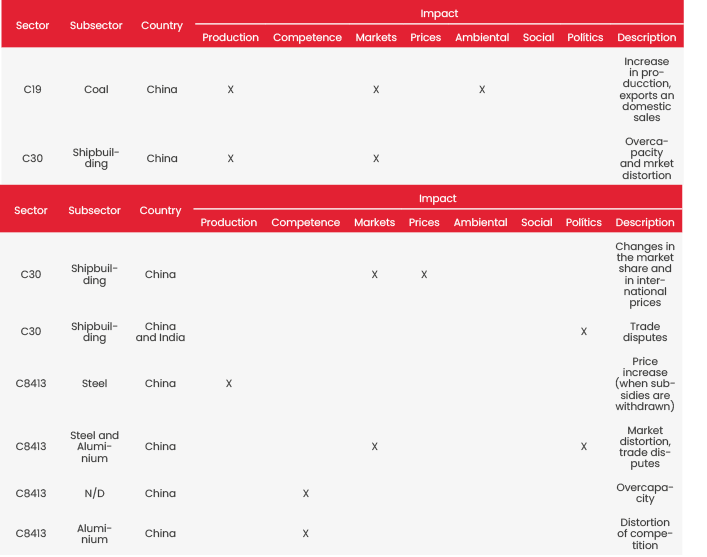
Once that the effects in of subsidies in the A sector have been explained, it is also necessary to refer to the effects that subsidies can generate in other industries. In this way, Table 2 shows the different effects corresponding to the subsidies to the manufacturing industry and state sector.
Table 2
Effects of subsidies on the manufacturing industry and public administration activities
Source: Adapted from the authors.
In general terms, Steger (2010) defined that government subsidization of industry is one of the most widespread problems in international trade, since all governments take part in some way in their national economies to achieve certain industrial or social policy objectives. At the same time, Bhala and Deuckjoo (2019), established that China is basically the only country that offers substantial financial and non-financial subsidies, which is closely related to the results presented in Table 2.
In the regard of the effects, Xiang and Kuang (2020) established that subsidies to the manufacturing industry stimulate domestic coal production, which results in a reduction of imports from foreign markets and ends up generating a negative trade destruction effect. For example, Chinese subsidies reduce Chinese coal imports from Australia, Indonesia, the United States, Colombia and Russia by 16.5%, 17.3%, 23.8%, 22.6% and 21.2% respectively. At the same time, Chinese coal exports to Japan, India and South Korea increase by 25.5%, 28.3% and 25.3%, after receiving subsidies. In addition, the study expressed that subsidies to this industry generate serious damages to the environment.
Similarly, Li and Tu (2020) established that China's subsidies, combined with lax competition policies, provide its companies with a competitive advantage. Thus, the author states that China has resorted to granting subsidies in the steel, shipbuilding and railway sectors to obtain scale cost advantages, which are later used to enter international markets.
On the other hand, the shipbuilding sector has also been affected by subsidies. Within this framework, global shipbuilding capacity has long exceeded demand due to the prevalence of subsidies to the industrial sector (Shaffer et al., 2015). Additionally, according to Wuttke (2017) subsidies are contributing to excess capacity in the low and medium levels of the Chinese market. Consequently, even representatives of China's National Development and Reform Commission claimed that the subsidies granted to this industry are not sustainable (Wuttke, 2017).
According to Bhala and Deukjoo (2019), “the general consequence of excess capacity and production on a global scale is the outward shift of the supply curves for goods such as steel and aluminum” (p.3). The authors noted that this led to a decline in international prices and increased pressure on producers from other countries, such as the United States. Additionally, it was determined that Chinese state-owned enterprises are a fundamental cause of these structural imbalances. However, it was emphasized that not all sectors have been influenced by public companies and those non-transparent behaviors which lead to overcapacity.
Moreover, Brown and Hillman (2019) referred to the provision of subsidies to the steel sector in China, where state-owned enterprises supply inputs to production, without considering market competition. Initially, it those subsidies were internationally accepted since they increased the demand for imported inputs such as coal and iron from Australia and Indonesia. However, in 2012, when China's growth slowed by 7% and its domestic demand for steel and aluminum fell, the surplus supply was redirected to international markets. As a result, China's share of the global steel and aluminum industries rose from 25% to over 50% of total production and capacity. Consequently, the United States imposed tariffs on these sectors in 2018, generating effects to countries like Canada, Mexico, and EU members, despite none of them was accused of using subsidies.
5.4 The issue of transparency
The issue of transparency is broad and challenging to address. According to the WTO (n.d.), transparency is a fundamental pillar and a legal obligation of the organization, as stated in Article X of the GATT and included in Article 25 of the ASCM. However, Low (2022) identified transparency as a systemic problem within the WTO. The author noted that, beyond enhancing certainty and predictability through prior contractual commitments on trade rules, the WTO aims to reduce information asymmetries via systematic and periodic notifications. Despite this, the convergence of rules within the WTO remains a chimera, so he places the issue of transparency as an essential point of reform (Low, 2022).
Similarly, Hoekman et al. (2020) expressed that the ASMC commands the notification of subsidies to ensure transparency, but this requirement has not been fully met. Thus, the World Trade Organization (2021) reported that 50 members failed to submit notifications for 2011, 57 for 2015, 67 for 2017, and 80 for 2019. The proportion of member states not making any notifications has significantly increased since 1995, rising from 25% to 49%. Collins-Williams and Wolfe (2010) emphasized the need for WTO members to improve timely compliance with their notification obligations and to enhance institutional capacity for analyzing and accessing reported information.
Conversely, Shaffer et al. (2015) explored reasons why countries fail to notify their subsidies, citing bureaucratic challenges, fear of disclosing adverse information, potential legal disputes over actionable subsidies, ambiguity in agreement terms, and the ease of reporting self-initiated actions (such as compensatory measures). They also pointed out that the OECD holds the largest database on subsidies but lacks coherent definitions across industrial, agricultural, and environmentally harmful subsidies, leading to confusion and deficiencies in notifications.
Formenti (2020) noted that "government disclosures are at an all-time low, and most countries have not met their notification obligations" (p.3). In the regard of this study, less than half of the notifications from China and the United States meet optimal transparency criteria, with compliance rates of 46% and 38%, respectively. Similarly, Lim et al. (2021) reported a decline in the notification levels of WTO members from 50% to 38% since 1995.
At the same time, Brown and Hillman (2019) argued that the voluntary notification system for subsidies is ineffective, with several countries ignoring or delaying their reports. In addition, the authors expressed that lack of consensus on the definition of a subsidy further contributes to the low number of notifications.
Likewise, Van Heulen (2023) highlighted significant deficiencies in the ASCM, noting that some forms of state intervention, including subsidies to and from state-owned enterprises, are not automatically recognized as "subsidies" under the WTO definition. Borlini (2019) added that subsidies often bypass direct government channels and are instead provided through affiliated or controlled entities. In this way, Dhingra and Meyer (2021) called for greater transparency in trade policy and a stronger link between trade policy and other political priorities.
Lennan and Flitzer (2023) observed that the ASCM lacks a specific framework for regulating fisheries subsidies due to significant discrepancies in information provided by organization members. On the other hand, The AFS introduces procedural obligations and provisions to enhance the transparency of fisheries subsidies, which according to Wang and Popova (2023), have a stronger legal impact against overcapacity and overfishing. However, the AFS requires approval from two-thirds of the multilateral forum, a something not achieved until the end of this investigation (WTO, n.d).
Schuhbauer et al. (2020) emphasized the need for increased transparency in fishing subsidy reports, highlighting the importance of information on specific types of subsidies granted, their distribution, and their impact on each subsector. In addition, they suggested that WTO notifications should require member countries to disclose how subsidies are allocated.
Within this framework, Gulotty (2022), expressed that the "rules-based" approach is encountering challenges in adapting to changes in the global trading system, as the legal texts are crafted to address the needs of the Member States that developed the regulations. The expansion of global production and economies like China has challenged the effectiveness of current WTO standards. Finally, the author notes that the issue of subsidies from market economies such as China, with its significant state sector, makes the issue of subsidies inevitable as issues that were overlooked in the past.
Treffler (2019) added that the lack of transparency from the Chinese government and its companies complicates the assessment of industrial subsidies in China. Despite China's claim of fully complying with its notification obligations under all WTO agreements, the WTO Secretariat pointed out that some subsidies remain unreported, particularly those related to state-owned enterprises and domestic support (WTO, 2021). As a consequence, Sacerdoti and Borlini (2019) argued that the WTO system has been under strain in recent years due to member states' inability to resolve conflicts over procedural rules such as notifications, transparency, and disputes.
Finally, Li and Tu (2020) mentioned the existence of a trilateral group made up of the United States, the European Union, and Japan, which aims to enhance transparency within the WTO. Their suggestions include implementing administrative sanctions for non-compliance with notification requirements, encouraging counter-notifications, and categorizing unnotified subsidies as "actionable subsidies" within the WTO framework. Similarly, Lino (2023) argued that Free Trade Agreements (FTAs) could serve as a testing ground to address gaps in WTO subsidy regulations, as the organization's reform efforts in this area are not expected to succeed soon. Furthermore, Lino (2023) established that countries like Japan and the EU are beginning to prioritize subsidies in their bilateral agreements.
6 Discussion
Throughout this study, it has been found that subsidies act as a mechanism to encourage production, generating various economic, social, and environmental impacts. For instance, KravcakovaVozarova and Kotulic (2016) and Wang et al. (2020) found a positive correlation between the provision of subsidies and the development of the respective industries, resulting in benefits such as increased farmer income, reduced import quotas, and economic growth in specific regions.
In this way, it can be noted that subsidies function as an incentive to strengthen a certain industry, in this case agriculture, since they reduce production costs and encourage more production, generating development. In this sense, producers will benefit from the delivery of subsidies, as well as the importance of the sector that receives them. Thus, Collins and Park (2019) were correct in establishing that subsidies can serve social issues, such as increasing the importance of underdeveloped areas. However, this will depend on the extent to which aid is delivered, since when supply exceeds domestic demand, said supply will move to foreign markets.
Similarly, authors such as Hopewell et al. (2019) and Xiang & Kuang (2020) described subsidies as "artificial" aid and agreed that they can alter global market shares and distort trade. Bown and Hillman (2019) and Kaloupsidi (2018) demonstrated that China's subsidies have significantly increased its global market shares at the expense of competitors and global prices. It is no coincidence that all the authors mentioned refer to China, as this research has consistently shown that China expertly manages subsidies across the different industries.
Although subsidies can promote development, the issue is that countries such as China continue to provide incentives without considering factors like internal demand. This leads to overproduction, which then spills into external markets, affecting market shares and international prices. Thus, subsidies can be both highly useful and potentially harmful, depending on their application.
Regarding environmental effects, the research has predominantly shown negative impacts. For instance, Montemayor et al. (2020) and Sumaila (2019) agreed that subsidies promote overcapacity and overfishing, as lower costs and higher incomes encourage indiscriminate fishing. In addition, Wang et al. (2022) noted that subsidies increase environmental harm through the use of machinery and other inputs.
In this way, it has been found that subsidies correlate with negative environmental impacts due to intensified production. The reduction in costs and the introduction of machinery not only result in economic effects but also in greater degradation of soil, oceans, and other ecosystems. Although Sumaila (2020) argued that "beneficial" subsidies could be seen as investments in fishery resource development, promoting sustainable resource management and stability in fishing communities, this view is kind of utopic, and contrary effects have been observed in practice due to the nature of the subsidies.
Within this framework, Schuenbauer et al. (2020) and Schuenbauer et al. (2017) noted that only a small percentage of subsidies were directed to the artisanal sector, with the majority going to the industrial sector. Industrial fleets, with their greater capture capacity, lead to overexploitation of fish populations, and subsidies to the industrial sector create unfair competition for artisanal fishermen, who have fewer resources. This results in wealth and power concentration within the sector, disadvantaging artisanal fishermen.
It should be noted that on practice, the large entities are those that benefit the most, often at the expense of small producers and the environment. This definitely underscores the importance of the World Trade Organization, as effective subsidy policies must focus on sustainability, equity, and resource conservation to mitigate these effects. Nevertheless, Hoekman and Nelson (2020) expressed that there is currently no notion of what constitutes a "good" subsidy under the WTO.
Conversely, Wuttke (2017) and Shaffer et al. (2015) agreed that subsidies to China's industry create overcapacity. At the same time, Brown and Hillman (2019), Kaloupsidi (2018), and Lim and Tu (2020) concurred that China's market shares have grown in recent years by providing a comparative advantage to its steel, aluminum, and shipbuilding industries. This has led to numerous trade disputes, affecting both the industrial and agricultural sectors (Brown and Hillman, 2019; Gulotty, 2022). Thus, beyond the different effects, the common and greatest determining factor among all of these authors is that the imposition of subsidies comes from China.
Consequently, although Evenett and Fritz (2021) identified China, the United States, and the European Union as the top global providers of subsidies. This research has shown that China is the leading economy in terms of subsidy provision, whether in agriculture, fisheries, or industry (OECD, 2023; Skerrit and Sumaila, 2021; Bhala and Deuckjoo, 2019). At the same time, it is important to note that the Asian giant's subsidies generate strong negative effects, which do not discriminate between industries or markets. This will strongly benefit the Asian giant, which has grown significantly due to its subsidy policies. Therefore, it is crucial to examine the global subsidy framework under the WTO and assess the transparency of different countries.
Transparency within the World Trade Organization (WTO) is a complex, multifaceted issue that has sparked various expert opinions and analyses. Reviewing different authors' perspectives reveals points of consensus and areas of criticism, highlighting the strengths and weaknesses of the current system. It is also important to analyze the organization’s agreements and standards.
First of all, it is necessary to establish that transparency in the World Trade Organization (WTO) is a complex and multifaceted issue that has generated various opinions and analyzes by experts. Through reviewing the perspectives of different authors, several points of consensus can be identified, as well as areas of criticism that highlight both the strengths and weaknesses of the current system. In addition, it is important to do an analysis based on what the different agreements or written standards of the organization.
According to the WTO (n.d.), transparency is a fundamental pillar and legal obligation within its agreements. However, the organization reported a significant increase in the proportion of member states failing to submit notifications since 1995 (WTO, 2021). Authors like Hoekman et al. (2020) and Formenti (2020) also noted that many WTO members do not fully comply with their notification obligations. Within this context, it is possible to mention that the lack of adequate notification by many WTO members is a critical issue affecting the transparency and fairness of the multilateral trading system.
In this way, authors like Treffler (2019) and the WTO (2021) highlighted China's lack of transparency in its notifications. It is evident that the WTO is at a critical point concerning transparency and notification deficiencies. Consequently, several authors have explored potential reasons for this lack of transparency.
In this regard, Shaffer et al. (2015) and Van Heulen (2023) agreed that a common issue leading to the lack of notification is the ambiguity surrounding what the agreements say. For instance, Bown and Hillman (2019) established that state-owned companies do not notify subsidies since they are not under the framework of the ASMC; since the agreement establishes that a subsidy is a financial contribution made by a “government entity” or a “public body”, excluding public companies (Barbosa and Bernal, 2007). Furthermore, Steger (2010) expressed there is no concrete understanding of what confers a benefit. However, the WTO specifies that the ASMC applies not only to measures of national governments, but also to those of subnational governments and state-owned enterprises (WTO, n.d.).
As it can be noted, there are significant discrepancies and different opinions regarding the interpretation of WTO regulations. This can be attributed to two main factors. Firstly, it is not in China's interest to report subsidies provided by its state-owned companies, as these subsidies have negative impacts. As a consequence, China can exploit these "discrepancies" and the inherent flaws within the agreements. Thus, the lack of regulation and specificity regarding subsidies within the WTO framework is identified as a major reason for the lack of notification.
Similarly, it can be established that to date there is no multilateral organization in charge of systematically recovering, gathering and disseminating data on fisheries subsidies, since it is not under the regulation of the ASCM (Lennan & Switzer, 2023; Formenti, 2020). Furthermore, the multilateral negotiation process to reach an agreement on fisheries subsidies has taken a little more than 20 years, and to date it has not come into force.
On the other hand, although Formenti (2020) expressed that government notifications to fisheries were at a historical minimum; other authors such as Wang and Popova (2023) established that agreements such as the AFS are generating a great legal impact against excess capacity and overfishing; so that these subsidies will go from being “harmful and ambiguous” to “profitable and transparent.” Thus, although negotiating an agreement that addresses fisheries subsidies could be considered great advance in multilateralism within the framework of the WTO, the agreement cannot address these subsidies until it comes into force.
Additionally, it should be noted that the WTO faces a major obstacle, since the agreements require the acceptance of at least two-thirds of the forum prior to its entry into force. Taking into account that large economies will often prefer to obtain economic benefits rather than environmental and social benefits; the implementation of such agreements may be delayed. Something similar happens with the notion of subsidies to state-owned companies, especially taking into account that large economies like China do not want to touch the issue. In this way, the WTO's subsidy framework remains inadequate in mitigating the repercussions of various types of subsidies. This proves that the multilateralism of the organization still faces a lot of inconsistencies; since the agreements are unable to address some current subsidy issues. Consequently, authors as Gulotty (2022) and Treffler (2019) highlight the necessity of reforming the "rules-based" approach of the WTO.
Similarly, Law (2020) identified transparency and subsidies as critical areas for WTO reform. However, Lino (2023) expressed skepticism about the success of these efforts in the near future. Given the discussions throughout this document, it is easy to concur with Lino's view; despite identifying several weaknesses within the WTO framework, the organization's multilateral negotiating system has been ineffective in addressing challenges like subsidies. This situation is unlikely to improve without cooperation, in addition that expecting rapid progress is unrealistic. The difficulty lies in persuading economic powers like China to enhance WTO jurisprudence, as this could sacrifice their own economic growth.
Finally, authors such as Lino (2023) and Li and Tu (2020) demonstrated the existence of alternative mechanisms to address subsidies. The necessity for countries to negotiate specific bilateral clauses within their free trade agreements is concerning, as it underscores the WTO's ineffectiveness in tackling this issue multilaterally. Furthermore, the collaboration of powers such as the United States, Japan, and the European Union to address the lack of transparency within the WTO and their efforts to "fill" its gaps suggest certain conclusions. While the initiative for cooperation is commendable, it also highlights the significant deficiencies within the WTO and the challenge of confronting economies like China, which has shown little interest in these negotiations.
7 Conclusions
The increase in subsidies among the largest global economies has generated a significant increase in trade tensions, and even raising fears of subsidy wars. The World Trade Organization (WTO) is the only global entity responsible for regulating this issue through its agreements. Thus, this investigation aimed to examine the framework of global subsidies under WTO rules and discuss international transparency regarding this issue. A systematic literature review was conducted based on the 2020 PRISMA declaration to meet the initially set of objectives. Consequently, several conclusions have been reached.
Firstly, it was found that subsidies act as a boost to production, and their effects depend on how this instrument is used. However, in the current global context, this economic instrument is generating more negative effects than positive ones. Subsidies lead to overproduction as producers are strongly motivated to increase income. This can result in the displacement of market shares, changes in global prices, and social and environmental impacts, depending on the industry receiving the incentives. For instance, in the case of fisheries subsidies, most incentives go to industrial fishermen who engage environmentally invasive practices. Additionally, these incentives disadvantage artisanal fishermen who compete with subsidized industrial fishermen.
A similar situation occurs with agricultural subsidies, where economies like China allocate a large portion of the state budget to develop the industry. However, producers become dependent on financial aid and continue producing despite insufficient demand. Within this framework, while subsidies can have positive effects, such as encouraging production to promote the growth of underdeveloped regions or promoting fishing resources; it has been noted that these instruments are often misused. Otherwise, they increase capacity quotas and shift supply to foreign markets. In addition, it was found that the subsidies provided by Chinese governments and state-owned companies are mostly responsible for these harmful effects at a global level.
Secondly, the inefficiency of the World Trade Organization in addressing these effects has been highlighted. The organization's transparency and credibility are at a critical point, particularly as larger economies like China have ceased reporting their subsidies. Thus, significant shortcomings were found in the quantity and quality of notifications, as well as large discrepancies in the understanding of the WTO's regulations and gaps in their agreements. China currently occupies a "privileged" position, indiscriminately subsidizing its various sectors: agricultural, industrial, and fishing.
Nevertheless, the WTO's agreements do not adequately address crucial contemporary issues, such as subsidies to Chinese state-owned companies or fisheries subsidies. Consequently, agreements like the ASMC have become outdated and unable to meet the needs of the current dynamic economic context. Furthermore, the organization's difficulty in reaching new agreements on urgent issues, such as fisheries subsidies, calls into question the WTO's multilateral negotiating capabilities. This situation benefits China, which continues to exploit legal loopholes and the inefficiency of the WTO. Considering everything stated in this document, it is clear that improving the situation soon is unlikely, since the negotiation and progress capabilities of the multilateral forum are limited.
However, it is worth mentioning that this study also has significant weaknesses and limitations. Firstly, it was challenging to quantify in detail the real effects of subsidies on a global scale, so that they limited the depth of the analysis. Additionally, several types of subsidies, such as those for vehicles, fossil fuels, and the energy sector, were not considered. Furthermore, agricultural subsidy policies such as the Common Agricultural Policy of the European Union (CAP) were not taken into account, because although this addresses crucial subsidy issues with a sustainable approach, these types of agreements fall outside the WTO framework.
In addition, one of the major challenges of this research was finding data on notifications by different countries, a task complicated by the shortcomings of the WTO. Although subsidies are economic policy instruments that are difficult to measure, the WTO is the only multilateral organization responsible for having such information. On the other hand, although the importance of fisheries subsidies is recognized to date, as there is no current framework that requires notification of such incentives, there are few empirical studies that calculate the notification percentages. Consequently, this study is a tool for scholars, researchers, and others interested in strengthening subsidies within the WTO framework, as it highlights the main weaknesses of the forum on this topic. It also underscores the need for continued research on the effects of subsidies in different industries, particularly through case studies to identify potential gaps. This can help enhance this discipline.
To conclude, criticism of inconsistencies in definitions and notification procedures highlight the need for a review and harmonization of WTO rules. Considering economic, political, and social trends, where China's market economy poses a threat to the rest of the world, improving institutional capacity and ensuring compliance with notification obligations are crucial steps to enhance WTO transparency. However, this effort is constrained by the broad scope of current agreements and the forum's difficulty in adopting new multilateral agreements. Especially when it is not in the interest of the most subsidizing economies to be regulated by new agreements, so hopes for improvement remain distant.
CRediT authorship contribution statement:
Luis Pinos Luzuriaga: Conceptualization, Formal analysis, Funding acquisition, Project administration, Supervision, Validation, Writing – review and editing.
Sofia Cordero: Data curation, Formal análisis, Investigation, Methodology, Resources, Software, Visualization, Writing – original draft.
Declaration of competing interest:
The authors have no competing interests to declare.
Referencias Bibliográficas
Anderson, K. (2016). Contributions of the GATT/WTO to global economic welfare: empirical evidence. Journal of economic surveys, 30(1), 57-92. Scopus. doi: 10.1111/joes.12087
Barbosa Mariño, J. D., Bernal Corredor, D., Figueroa Sierra & Asociados, & Godoy & Hoyos Abogados. (2007). Las subvenciones prohibidas en el Acuerdo sobre Subvenciones y Medidas Compensatorias de la OMC. International Law: Revista Colombiana de Derecho Internacional, (9), 155-203. https://www.redalyc.org/pdf/824/82400905.pdf
Bhala, R., & Deuckjoo, N. (2019). The WTO´S under-capacity to deal with global over-capacity. 14(1), 1-32. Retrieved Febrero 17, 2024, from file:///Users/sofiacordero/Downloads/SSRN- id3362161.pdf
Borlini, L. (2020). When the Leviathan goes to the market: A critical evaluation of the rules governing state-owned enterprises in trade agreements. Leiden Journal of International Law, 33, 313-334. Web of Science. doi:10.1017/S0922156519000761
Borlini, L. (2023). The Covid 19 Exogenous Shock and the Crafting of New Multilateral Trade Rules on Subsidies and State Enterprises in the Post-Pandemic World. Special Issue: The Resurgence of the State as an Economic Actor–International Trade Law and State Intervention in the Economy in the Covid Era, (24), 72-101. Web of Science. doi:10.1017/glj.2023.12
Brown, C. P., & Hillman, J. A. (2022). WTO’ing a Resolution to the China Subsidy Problem. Journal of International Economic Law, 22(4), 557-578. Web of science. DOI10.1093/jiel/jgz035
Cisneros Montemayor, A., Ota B, Y., Bailey C, M., C Hicks, C., Rogers, A., Sumaila, R., & Virdin, J. (2020). Changing the narrative on fisheries subsidies reform: Enabling transitions to achieve SDG 14.6 and beyond. Marine Policy, 117. Scopus. https://doi.org/10.1016/j.marpol.2020.103970
Collins, D. A., & Park, T. J. (2017). Deafening Silence or Noisy Whisper: Omission Bias and Foregone Revenue Under the WTO Agreement on Subsidies and Countervailing Measures. Journal of World Trade, 1-24. https://papers.ssrn.com/sol3/papers.cfm?abstract_id=2964966
Collins-Williams, T., & Wolfe, R. (2010). Transparency as a trade policy tool : the WTO’s cloudy windows. World Trade Review, 9(4), 551-581. doi:10.1017/S1474745610000303
Dhingra, S., & Meyer, T. (2021). Leveling the Playing Field: Industrial Policy and Export-Contingent Subsidies in India–Export Related Measures. World Trade Review, (20), 606–622. Web of Science. doi:10.1017/S147474562100032X
Evenett, S. J., & fritz, J. (2021). Subsidies and market access: towards an inventory of subsidies by China, the EU and USA. file:///Users/sofiacordero/Downloads/GTA_28_-_Subsidies_and_Market_Access.pdf
Florini, A. (2007). The Battle Over Transparency. In the Right to Know: Transparency for an Open World. (pp. 1-16). https://doi.org/10.7312/flor14158-intro
Fondo Monetario Internacional, Organización para la Cooperación y el Desarrollo Económicos, Organización Mundial del Comercio, & Banco Mundial. (2022). Subvenciones, Comercio Y Cooperación Internacional. https://www.wto.org/spanish/res_s/booksp_s/repintcoosub22_s.pdf
Formenti, L. (2022). Assessing transparency in fisheries subsidies: A notification-driven analysis. Marine Policy, 136, 1-11. https://doi.org/10.1016/j.marpol.2020.104152
Gale, F. (2013). Growth and Evolution in China’s Agricultural Support Policies. Economic Research Service, 153, 3-60. https://www.ers.usda.gov/webdocs/publications/45115/39368_err153.pdf?v=41491
Gulotty, R. (2023). WTO Subsidy Disciplines. World Trade Review, (22), 330-341. Web of Science. doi:10.1017/S1474745622000118
Hoekman, B., & Nelson, D. (2020). Rethinking international subsidy rules. The World Economy. DOI: 10.1111/twec.13022
Hoekman, B. H. X. T. a. R., Wolfe, R., & Tu, X. (n.d.). China and the WTO Reform. Robert Schuman Centre for Advanced Studies Global Governance Programme-477, 59. SSRN. http://dx.doi.org/10.2139/ssrn.426
Hopewell, K. (2019). US-China conflict in global trade governance: the new politics of agricultural subsidies at the WTO. Review of International Political Economy. Scopus. DOI 10.1080/09692290.2018.1560352
Instituto Nacional de Estadísticas y Censos (INEC). (2012). CIIU 4.0. Instituto Nacional de Estadística y Censos. Retrieved April 04, 2024, from https://aplicaciones2.ecuadorencifras.gob.ec/SIN/descargas/ciiu.pdf
Josling, T., & Tangermann, S. (1999). Implementation of the WTO Agreement on Agriculture and Developments for the Next Round of Negotiations. European Review of Agricultural Economics, 26,371-388. Retrieved Febrero 22, 2024, from https://econpapers.repec.org/article/ouperevae/v_3a26_3ay_3a1999_3a371-88.html
Kalouptsidi, M. (2018). Detection and Impact of Industrial Subsidies: The Case of Chinese Shipbuilding. Review of Economic Studies, (85), 1111-11588. doi:10.1093/restud/rdx050
Karim, R. (2014). Transparency is the Most Important Governance Issue in the WTO Subsidy Control. SSRN Electronic Journal. http://dx.doi.org/10.2139/ssrn.2498863
Kravcakova Vozarova, I., & Kotulic, R. (2015). Quantification of the effect of subsidies on the production performance of the Slovak agriculture. Procedia Economics and Finance, (39), 298- 304. Scopus. doi: 10.1016/S2212-5671(16)30327-6
Kumar, R., Ravinesh Kuma, R., Stauvermann, P. J., & Arora, P. (2020). Effect of Fisheries Subsidies Negotiations on Fish Production and Interest Rate. Journal of Risk and financial Management. https://doi.org/10.3390/jrfm13120297
Lennan, M., & Switzer, S. (2023). Current Legal Developments World Trade Organization. The International Journal of Marine and Coastal Law, 38, 161-177. Scopus 10.1163/15718085-bja10116
Li, S., & Tu, X. (2020). Reforming WTO Subsidy Rules: Past. Experiences and Prospects. Journal of World Trade, 54(6), 853–888. Retrieved Febrero 26, 2024, from http://ciwto.uibe.edu.cn/docs/2021-07/0cc6c52556b94f299991299e5fd53801.pdf
Lim, S. S., Kim, C. M., Kim, D., Sung, K., & Lee, E. S. (2022). The road ahead and the future of eliminating fisheries subsidies under the WTO. Web of conferences, 348. https://doi.org/10.1051/e3sconf/202234800014
Lino, A. (2023). Disciplining Subsidies Through Free Trade Agreements (FTAs): Emerging Developments in Japan’s FTAs and Their Implications. German Law Journal, (24), 179-198. Web of Science. doi:10.1017/glj.2023.6
Low, P. (2022). The WTO in Crisis: Closing the Gap between Conversation and Action or Shutting Down the Conversation? World Trade Review, 21(4), 274–290. Web of Science. doi:10.1017/S1474745622000064
Mera, Rabobank, C. (2017). China’s selling may keep food prices low this year. Retrieved May 20, 2024, from https://www.ft.com/content/453b1857-8232-3995-92e2-b090a0668faa
Meyer, T., & Dhingra, S. (2021). Leveling the Playing Field: Industrial Policy and Export-Contingent Subsidies in India-Export Related Measures. World Trade Review, (20), 606-622. doi:10.1017/S147474562100032X
Michalek, J. J. (2004). Subsidies in the context of the World Trade Organization. In Reflets et perspectives de la vie économique 2004/1: Les subventions (pp. 25-38). De Boeck Supérieur. DOI10.3917/rpve.431.0025
Organización Mundial del Comercio. (n.d.). OMC | La OMC en pocas palabras. World Trade Organization. Retrieved March 2, 2024, from https://www.wto.org/spanish/thewto_s/whatis_s/inbrief_s/inbr_s.htm
Organización Mundial del Comercio. (2006). Informe sobre el comercio mundial: Definición de las subvenciones. OMC. Retrieved March 3, 2024, from https://www.wto.org/spanish/res_s/booksp_s/anrep_s/wtr06-2b_s.pdf
Organización Mundial del Comercio. (2007). Transparency. In World trade report: Six decades of multilateral trade cooperation: What have we learnt? (p. 388). https://www.wto.org/english/res_e/booksp_e/anrep_e/world_trade_Report07_e.pdf
Organización Mundial del Comercio. (2021). Notification provisions under the agreement on subsidies and countervailing measures (12). Committee on Subsidies and Countervailing Measures. Retrieved 01 12, 2023, from https://docs.wto.org/dol2fe/Pages/SS/directdoc.aspx?filename=q:/G/SCM/W546R12.pdf&Op en=True
Organización mundial del Comercio. (n.d.). OMC - Negociaciones sobre las subvenciones a la pesca. World Trade Organization. Retrieved May 2, 2024, from https://www.wto.org/spanish/tratop_s/rulesneg_s/fish_s/fish_s.htm
Organización Mundial del Comercio. (2008). WTR 2008_S.indb. World Trade Organization. Retrieved febrero 22, 2024, from https://www.wto.org/spanish/res_s/booksp_s/anrep_s/world_trade_report08_s.pdf
Organización Mundial del Comercio. (s.f). Subvenciones y Medidas compensatorias: explicación. World Trade Organization. Retrieved March 15, 2024, from https://www.wto.org/spanish/tratop_s/scm_s/subs_s.htm
Organización Mundial del Comercio. (s.f). WTO Glossary. worldtradeorganization.com. Retrieved March 15, 2024, from https://www.wto.org/english/thewto_e/glossary_e/transparency_e.htm
Organización para la Cooperación y Desarrollo Económico. (n.d.). Subsidies, Competition and Trade Retrieved March 4, 2024, from https://web-archive.oecd.org/2022-11-10/645220-subsidies- competition-and-trade-2022.pdf.
Organización para la Cooperación y el Desarrollo Económico. (2023). In OCDE-FAO Perspectivas Agrícolas 2023-2032. Food & Agriculture Org. https://doi.org/10.1787/19991142.
Oxford´s University Press. (s.f). subsidy noun - Definition, pictures, pronunciation and usage notes Oxford Advanced Learner's Dictionary at OxfordLearnersDictionaries.com. Oxford Learner's Dictionaries. Retrieved February 20, 2024, from https://www.oxfordlearnersdictionaries.com/definition/english/subsidy?q=subsidy
Page, M. J., McKenzie, J. E., Bossuyy, P. M., Boutron, I., Hoffmann, T. C., Mulrow, C. D., Shamseer, L., Tezlaff, J. M., All, E. A., Brennan, S. E., Chou, R., Glanvillei, J., Grimshaw, J., Lalu, M., Hróbjartsson, A., Li, T., Loder, E. W., Wilson, E. M., McDonald, S., & McGuiness, L. A. (2020). Declaración PRISMA 2020: una guía actualizada para la publicación de revisiones sistemáticas. Revista española de cardiología, 74(9). DOI: https://doi.org/10.1016/j.recesp.2021.06.016
Robert Wolfe. (2013). World Trade Organization Economic Research and Statistics Division Letting the sun shine in at the WTO: How transparency brings. World Trade Organization. https://www.wto.org/english/res_e/reser_e/ersd201303_e.pdf
Sacerdoti, G., & Borlini, L. (2023). Systemic Changes in the Politicization of the International Trade Relations and the Decline of the Multilateral Trading System. German Law Journal, (24), 17- 44. Web of Science. doi:10.1017/glj.2023.10
Schrank, W. (2003). Introducing fisheries subsidies. https://www.fao.org/3/y4647e/y4647e.pdf
Schuhbauer, A., Chuenpagdee, R., Cheung, W., Geer, K., & Sumaila, R. U. (2017, Agosto). How subsidies affect the economic viability of small-scale fisheries. Marine Policy, 82, 114-121. DOI: 10.1016/j.marpol.2017.05.013
Schuhbauer, A., Skerrit, D., Ebrahim, N., Le Manach, F., & Sumaila, R. (2020, Septiembre 29). The Global Fisheries Subsidies Divide Between Small- and Large-Scale Fisheries. Sec. Marine Fisheries, Aquaculture and Living Resources, 7(539214). Volume 7 - 2020 | https://doi.org/10.3389/fmars.2020.539214
Sengupta, R. (2022). Fisheries subsidies negotiations towards the WTO’s 12th Ministerial Conference: Considerations for developing countries. Third World Network. https://ourworldisnotforsale.net/2022/TWN_Fisheries.pdf
Shaffer, G., Wolfe, R., & Le, V. (2015, Diciembre 17). Can Informal Law Discipline Subsidies? Journal of International Economic, (18), 711-741. Scopus. https://www.scopus.com/record/display.uri?eid=2-s2.0- 84966430918&origin=resultslist&sort=plf- f&src=s&sid=b2c430a8e72e7f42e3ecd6c0dbe0eb5c&sot=b&sdt=cl&cluster=scofreetoread% 2C%22all%22%2Ct&s=TITLE-ABS- KEY%28%22WTO%22+AND+%22SUBSIDIES%22%29&sl=36&sessionSea
Singh, G. (2017). Subsidies in the Context of the WTO's Free Trade System: A Legal and Economic Analysis. Springer International Publishing. DOI 10.1007/978-3-319-62422-8
Skerrit, D. J., & Sumaila, R. (2021). Broadening the global debate on harmful fisheries subsidies through the use of subsidy intensity metrics. Marine Policy, 128, 1-8. Scopus. https://doi.org/10.1016/j.marpol.2021.104507
Steger, D. (2010). The Subsidies and Countervailing Measures Agreement: Ahead of its Time or Time for Reform? Journal of World Trade. https://papers.ssrn.com/sol3/papers.cfm?abstract_id=1915799
Sumaila, R., Ebrahim, N., Schunbahuer, A., Skerrit, D., Li, Y., Kim, H. S., Mallory, T., Lam, V. W.L., & Pauly, D. (2019). Updated estimates and analysis of global fisheries subsidies. Marine Policy, 109. https://doi.org/10.1016/j.marpol.2019.103695
Tangerman, S. (2002). Europe's Agricultural Policies and the Millennium Round. The World Economy, 22(9), 1155-1178. https://doi.org/10.1111/1467-9701.00253
Trefler, D. (2019). The China-OECD trade divide: building bridges. China Economic Journal, 12, 195-207. https://doi.org/10.1080/17538963.2019.1603644
Van Heuvelen, E., & Fondo Monetario Internacional. (2023). Subsidy Wars: Cooperation and common understanding could dial back trade tensions. Trade, Disrupted, 60(2), 54-56.
Wang, R., & Popova, L. (2023). International trade disputes related to fish products and Agreement on Fisheries Subsidies: Key regulatory issues and litigation outlook. World Economy, 39(3). DOI: https://doi.org/10.21638/spbu05.2023.302
Wang, X., Li, D., & Yu, Y. (2022). Current Situation and Optimization Countermeasures of Cotton Subsidy in China Based on WTO Rules. Journal of Agriculture, 1245. https://doi.org/10.3390/ agriculture12081245
Wuttke, J. (2017). The Dark Side of China’s Economic Rise. Global Policy, 8(4), 62-71. doi: 10.1111/1758-5899.12439
Xiang, H., & Kuang, Y. (2019, Noviembre 13). Who benefits from China’s coal subsidy policies?A computable partial equilibrium analysis. Resource and Energy Economics, 59. https://doi.org/10.1
